
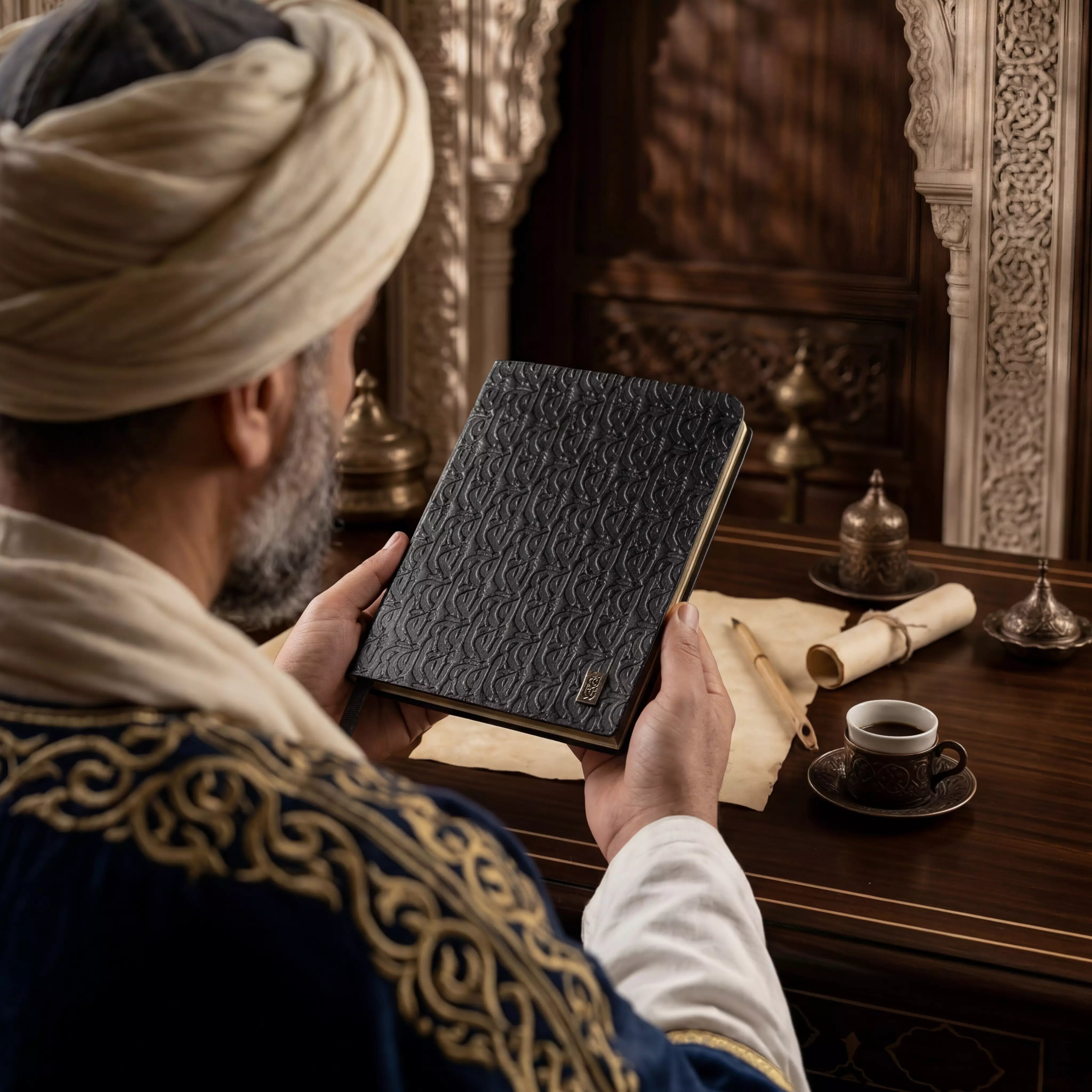
Journaling as Ibadah: Writing as a Form of Spiritual Presence
The lamp is low. The house is still. Before Fajr has fully brightened the sky, a hand reaches for a leather-bound notebook and opens it to a clean, ivory page. Journaling as ibadah writing as an act of devotion begins not with a grand declaration, but with this: a breath, a bismillah, and a pen meeting paper in the unhurried quiet before the world makes its demands. Across centuries of Islamic civilisation, the act of writing was never merely administrative. It was intimate. Scholars wrote to refine their souls as much as to preserve their thoughts. To understand journaling as ibadah is to recover something ancient and deeply human the recognition that a page offered with presence is a page offered with purpose.
The Sacred Lineage of the Written Word
Islam is, at its foundation, a tradition of the written word. The first command revealed to the Prophet ﷺ was Iqra to read, to recite, to attend. The scholars who flourished in the gardens of Córdoba and the candlelit libraries of Toledo understood this command as a lifelong orientation: to engage with knowledge not as an abstraction, but as a living practice inscribed in ink and embodied in character.
The ulama of Al-Andalus did not write only for posterity. They wrote to think. To remember what Allah had given them in a moment of clarity. To hold themselves accountable. Their journals, letters, and marginal notes many now preserved in the great collections of Morocco and Istanbul reveal a culture in which writing was inseparable from a life of intentional worship.
To write with awareness of the Divine, with gratitude and honest self-examination, is to follow in a lineage of extraordinary depth. The notebook becomes, in this context, not a productivity tool but a companion of the inner life.
Niyyah Before the Pen: The Intention That Transforms the Practice
In Islamic understanding, every act is coloured by the intention behind it. The Prophet ﷺ said: "Actions are but by intentions, and every person shall have only that which they intended." This principle so central to Islamic ethics transforms the most ordinary act when applied with sincerity.
Journaling as ibadah begins, then, not with the first word written but with the moment before it. A brief pause. A conscious orientation of the heart. An acknowledgement that this time, this page, this honesty is being offered in a spirit of accountability and gratitude to the One who knows what lies within.
This intention does not require elaborate ritual. It requires only a breath of awareness. The pen in the hand, the page beneath it, and a quiet recognition: I am here. I am present. What I write now, I write with full attention.
That shift small in form, vast in meaning is what distinguishes writing from spiritual journaling. It is the niyyah, not the notebook, that makes the difference.
What the Scholars of Al-Andalus Understood About Writing and the Self
Ibn Hazm of Córdoba, one of the great minds of the Islamic world, wrote in his Tawq al-Hamama The Ring of the Dove with a precision and vulnerability that still disarms the modern reader. He was not merely documenting; he was examining himself. The written form was, for him, a mirror one that did not flatter but clarified.
This tradition of self-examination through writing muhasaba, the accounting of the self runs through Islamic spirituality with deep roots. The scholars who cultivated Andalusian civilisation knew that the interior life requires tending. Not through harsh self-judgment, but through honest, patient inquiry.
To sit with a journal and ask: What did I give today? What did I overlook? Where was I truly present, and where did I simply pass through? this is muhasaba in motion. It is the practice of the people of presence, those who take seriously the call to live with consciousness rather than habit.
The gardens of Al-Andalus their intricate geometry, their play of water and shade, their cultivation of beauty as a form of meaning were never separate from the interior life of those who tended them. Both the garden and the page ask the same thing: that you return to them, consistently, with care.
The Page as a Space of Muraqabah: Watchfulness and Gratitude
Muraqabah the practice of watchfulness, of maintaining an interior awareness of the Divine presence does not require a prayer mat or a particular hour. It requires only the decision to remain attentive, to notice, to receive what is given.
A journaling practice rooted in spiritual presence carries this quality into everyday life. When the mind knows it will be asked at day's end to account for what it witnessed what moments of beauty arrived uninvited, what kindnesses were exchanged, what tests were offered and met it begins to move through the hours differently. More slowly. More gratefully.
Consider what this kind of intentional writing cultivates across time:
- Shukr (gratitude): Recording even small gifts light on water, warmth of tea, a kind word from a stranger trains the heart to recognise abundance where it might otherwise see scarcity.
- Tawadu (humility): Honest writing reveals patterns of thought and behaviour that the ego prefers to overlook. The page cannot be flattered. It simply holds what you give it.
- Tawakkul (trust): Writing fears and uncertainties, then releasing them into the page, is a form of surrender an acknowledgement that the burden was never ours to carry alone.
This is not therapy, though it heals. It is not performance, though it demands honesty. It is simply the practice of returning to the self with enough gentleness to look clearly, and enough faith to keep going.
There is a tenderness to the notebook that has been written in daily its spine worn soft, its pages slightly warped from the pressure of a hand that returned again and again with honesty. It is the tenderness of something used with love.
Journaling as ibadah asks nothing dramatic. It asks for a few quiet minutes, a pen, and the willingness to be present on the page as you wish to be present in your life attentive, grateful, and awake to the gift of each ordinary day.
If you are ready to begin, or to begin again, let the notebook you choose hold that intention with you. Crafted in full-grain Italian leather, rooted in the Andalusian art of living, TAKAFA journals are made for exactly this kind of return to the page, to the self, and to what matters most. Explore the collection and find your companion for the practice.


